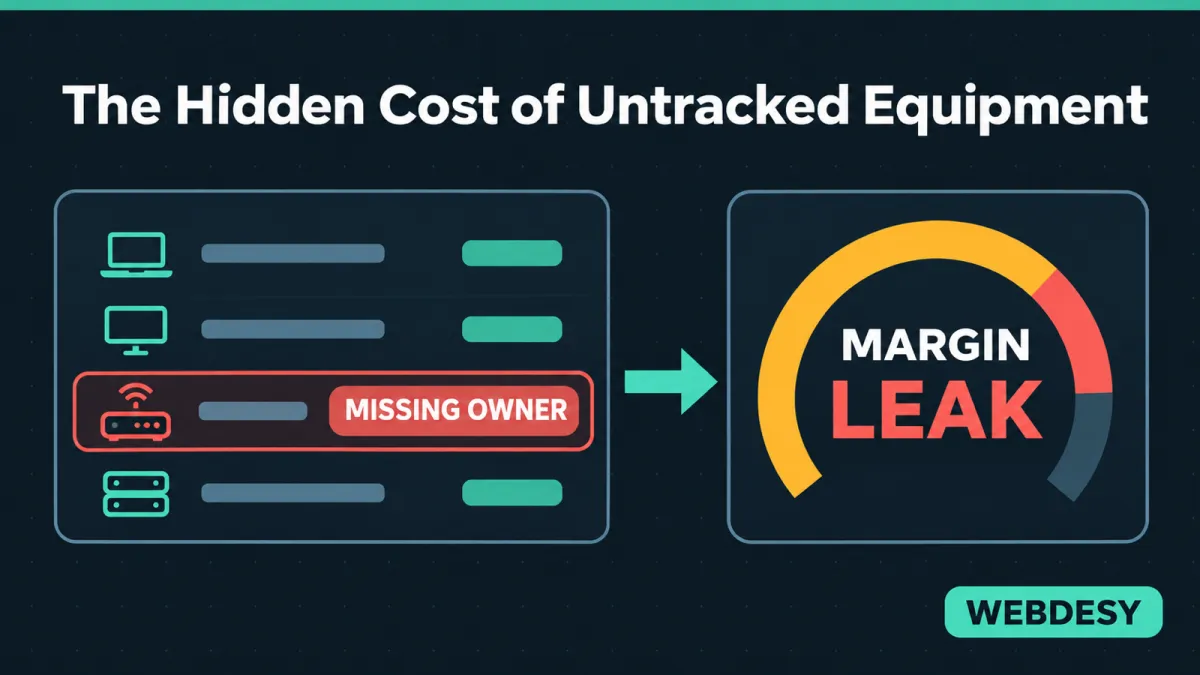

Fast-growing web operations often accumulate equipment faster than finance teams can track it. New laptops, monitors, networking devices and production hardware enter service across departments, while older assets move between employees or sit unused. Each missed transfer, disposal or depreciation entry can distort the balance sheet and quietly reduce margins.
The risk grows when purchasing data, accounting records and operational inventories live in separate systems. Clear ownership and consistent records help finance teams see the real cost of growth before year-end reporting exposes the gaps.
Rapid Growth Creates Balance Sheet Blindspots
A web business may add 50 employees in a quarter, equip a second office and expand its hosting infrastructure at the same time. Procurement records the purchases, IT assigns the devices and finance capitalizes qualifying costs. Without a shared process, those records quickly diverge.
Poor tracking can leave retired equipment on the books or cause teams to expense items that should be capitalized. These errors affect asset values, depreciation charges and operating margins. The financial impact of poor processes can also extend into duplicated work and slower reporting.
Assign one accountable owner for each asset category. Require standardized asset IDs, purchase dates, locations and status updates before invoices close. Monthly reconciliation between procurement, IT and finance can catch discrepancies while the transactions are still easy to investigate.
Understanding Equipment Depreciation Curves
Depreciation spreads an asset’s recorded cost across its expected useful life, but the chosen method should reflect how the organization receives value from that equipment. A high-performance workstation may deliver most of its productive value early, while office fixtures can remain useful for much longer.
Consider a server purchased for $24,000 with a four-year useful life and no expected residual value. Straight-line depreciation records $6,000 per year. An accelerated method recognizes more expense during the earlier periods. The method and assumptions can materially change reported profit, especially when purchases increase sharply.
Review useful lives against actual retirement data at least once a year. Finance teams should also document residual values, depreciation methods and impairment indicators. Broader market analysis discussions can provide useful economic context when changing technology costs or business conditions affect capital planning.
Upgrading Beyond Ad-Hoc Spreadsheets
Spreadsheets can handle a small equipment register, but problems emerge when several entities, currencies and approval teams become involved. Formula changes may go undocumented, duplicate records can survive for months, and only one person may understand how the workbook works.
Organizations facing that level of complexity should consider fixed asset management software that automates depreciation and tracks capitalization, valuation and asset lifecycle events. A centralized system can connect each accounting entry to a specific asset and preserve consistent rules across companies.
Before migrating, clean the existing register. Confirm that every active asset has a unique identifier, acquisition value, service date, location and assigned owner. Separate genuine disposals from missing records, then test calculations on a small asset group before importing the full portfolio.
Protecting Margins Through Full Audit Trails
An audit trail should show who created an asset, who changed its useful life and when it moved or left service. That history lets finance teams explain changes without reconstructing events from emails, invoices and old spreadsheet versions.
Set approval thresholds for acquisitions, transfers, write-downs and disposals. Restrict changes to depreciation rules and require a reason for every manual adjustment. Quarterly spot checks should compare selected records with physical or digitally assigned equipment, while exception reports flag assets with missing owners, unusual values or overdue reviews.
Growth will keep creating new equipment transactions. The practical goal is to ensure every purchase has a traceable financial life from invoice approval through final disposal. Once that chain is visible, finance leaders can identify idle assets, correct depreciation errors earlier and keep expansion costs from disappearing inside the balance sheet.
Leave a Reply
You must be logged in to post a comment.