If a site is not getting enough organic visibility, it is tempting to jump straight into backlinks, blog posts, or AI-search tactics. The better order is usually more boring and more effective: fix the technical base, choose the right keyword direction, then build authority from competitor evidence.
The Loom above walks through that sequence on a real SEO example. The public version below keeps the client details generalized, but preserves the useful workflow you can reuse for a homepage, service page, or priority landing page.
This plan zooms in on one page at a time. If you want the site-wide version that starts from realistic keyword picks across many pages, see my three-step SEO workflow for better rankings.
Quick Summary
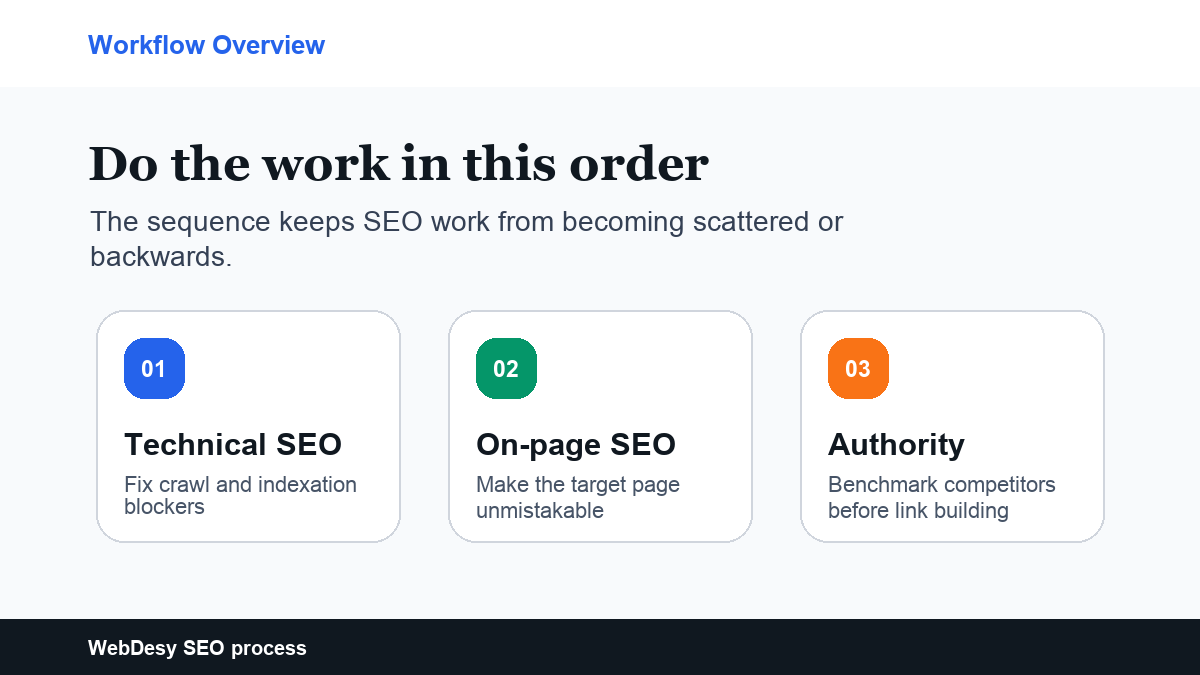
- Step 1: Remove major technical SEO issues before chasing more visibility.
- Step 2: Decide which primary keyword and search intent the page should target.
- Step 3: Use competitors to prioritize backlinks, entities, schema, and reporting.
This is the same logic I use when turning an SEO audit into a practical recovery plan. If you want a deeper audit-first framing, see my guide on turning SEO audit findings into a recovery plan.
Who This Workflow Is For
This workflow works best when a site already exists, but search visibility is not moving as expected. It is especially useful for:
- homepages that need to rank for one clear service or product category;
- service pages that are technically live but weakly optimized;
- niche landing pages where keyword direction is still unclear;
- sites with crawl issues, orphan pages, duplicate pages, or broken internal links;
- businesses that want AI-search visibility without ignoring classic SEO foundations.
Video Checkpoints
- 0:00 – The overall SEO visibility game plan.
- 2:03 – How to improve homepage or landing-page text once the technical base is clean.
- 4:24 – How competitor backlink data can guide authority building.
- 6:19 – How to turn the workflow into next steps, reporting, and pricing.
Transcript-style summary: In the video I audit the visibility of one priority page in three passes. The first pass clears technical blockers such as broken internal links, sitemap redirects, and orphan or duplicate pages. The second pass commits the page to one clear keyword direction and tightens the headline, title, alt text, and internal links around it. The third pass uses competitor backlink patterns to decide which authority signals to build first, and closes with how to turn the plan into next steps, reporting, and pricing.
Step 1: Fix Technical SEO Issues First
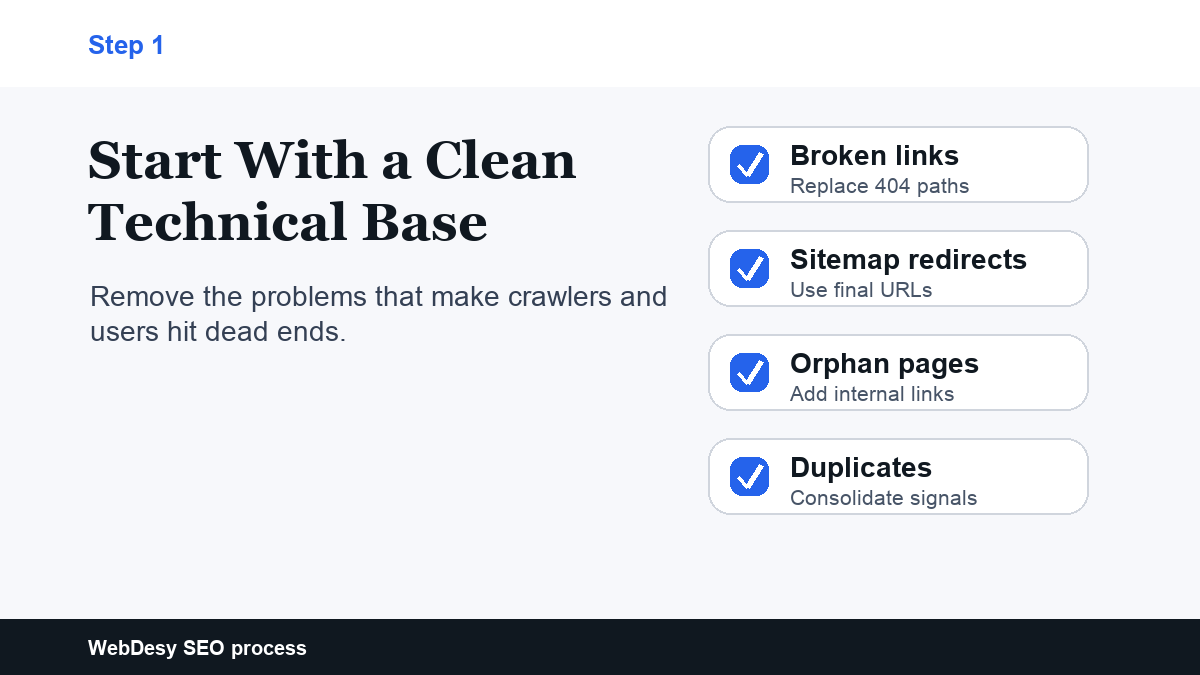
Technical SEO is not the most glamorous part of the workflow, but it is often the part that makes everything else easier. If important URLs are orphaned, internal links point to broken pages, redirects sit inside the XML sitemap, or duplicate pages compete with each other, Google has to work harder to understand the site.
The first pass should focus on issues that create crawl waste or bad user paths:
- Broken internal links: Replace links to 404 pages with live, relevant destinations.
- Redirects in XML sitemaps: Keep the sitemap focused on final, canonical URLs (see the Google Search Central sitemap guidelines).
- Orphan pages: Add internal links to pages that should be crawled and discovered.
- Duplicate or thin pages: Consolidate, canonicalize, or improve pages that overlap.
- Broken redirects: Repair redirect chains that lead to dead ends or unexpected URLs, following the redirect guidelines from Google Search Central.
This is why I usually separate technical SEO from keyword research. A keyword plan is much more useful once the site has fewer crawl and indexation problems in the way.
A cleanup also needs to stay clean. After the first pass, I use the process in how to avoid new technical SEO issues after a site audit cleanup so the same problems do not return.
Step 2: Choose One Clear Keyword Direction
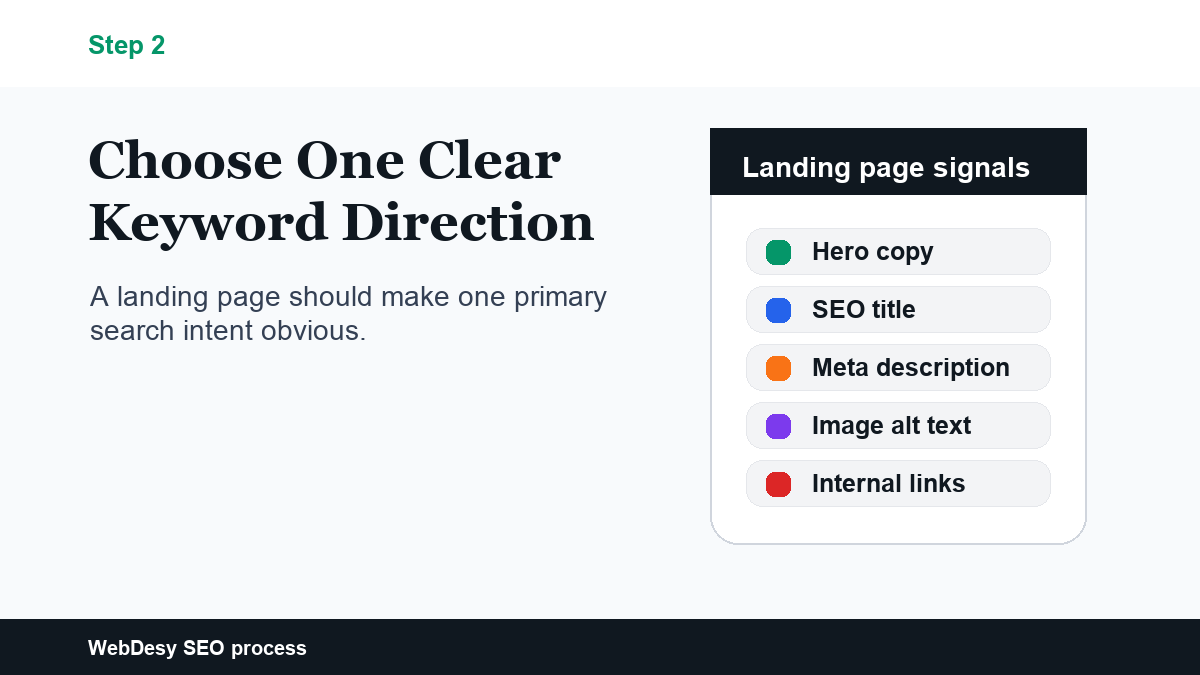
After the technical base is stable, the next question is simple: what should the page actually be known for?
Many landing pages try to target several related phrases at once. That can work when the phrases share the same intent, but it becomes messy when the page is trying to rank for different product categories, services, or audiences at the same time. The more useful public lesson is this: choose the clearest primary intent first.
Once the target is chosen, the page should make that intent obvious in the places both users and search engines notice quickly:
- the above-the-fold headline or supporting copy;
- the SEO title and meta description;
- image alt attributes when the image is relevant;
- internal links from related pages and blog posts, following the link best practices from Google Search Central;
- supporting sections that answer common buyer questions.
If you are building a broader content plan around that page, the next layer is informational keywords. These are blog-friendly topics that answer earlier-stage questions and then guide readers toward the money page. I cover that process in more detail in how I do keyword research.
Before and After Example
Here is a simplified version of the kind of on-page change this workflow can produce.
| Before | After |
|---|---|
| The page headline describes the business in broad terms, but does not clearly name the main search intent. | The headline and first paragraph make the primary service or product keyword obvious above the fold. |
| The title tag combines several keyword ideas, so the page looks unfocused. | The title tag leads with the strongest keyword and supports it with a clear value proposition. |
| Images have empty or generic alt text, and internal links do not reinforce the target page. | Relevant images get descriptive alt text, and related pages link back using natural anchor text. |
The point is not to stuff the page with one phrase. The point is to make the page easier to classify, easier to trust, and easier to connect to related content on the site.
Step 3: Use Competitors to Prioritize Authority
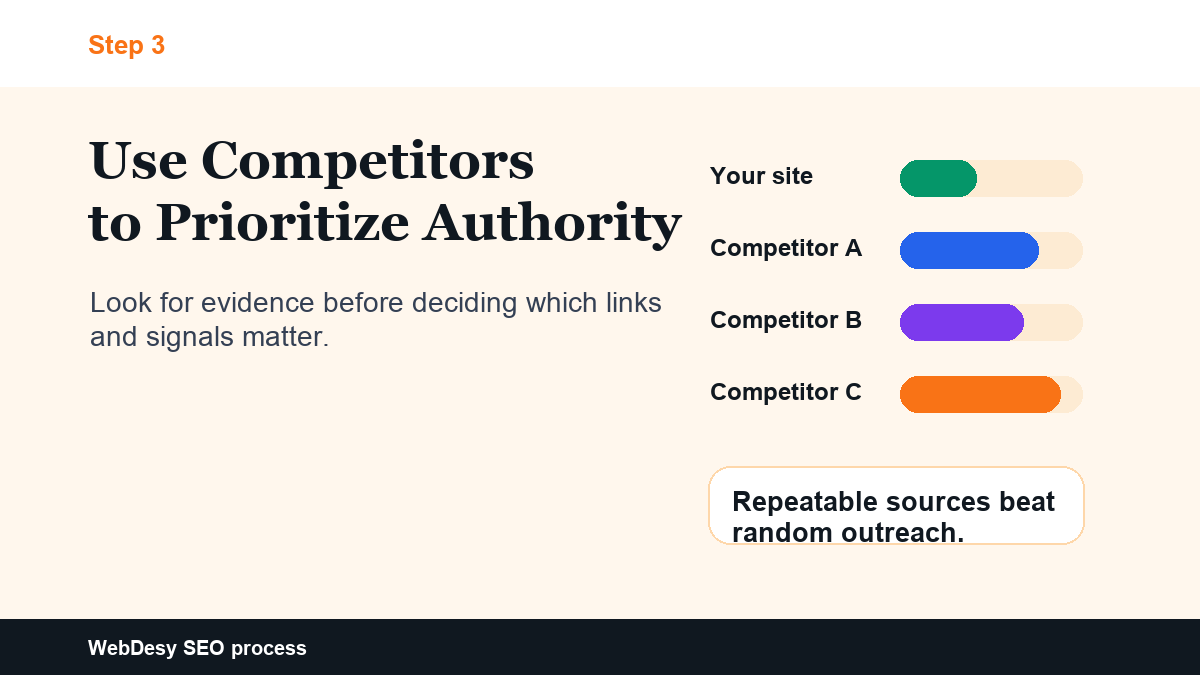
Backlinks are still part of the workflow, but they should not be treated as a random volume game. The fastest way to make link building more practical is to compare the pages and domains that already rank for the target topic.
Competitor research can answer questions like:
- Which domains link to the competitors repeatedly?
- Are there directories, associations, partner pages, podcasts, or PR sources that appear often?
- Do competitors have stronger informational content supporting the landing page?
- Are there entity, schema, or topical authority gaps that make them easier for search engines to understand?
This matters for classic SEO and for AI search visibility. Backlinks alone will not fix a confusing page or a weak technical base, but they can strengthen a page that already has clear intent, strong content, and clean crawl paths. That is the core point behind my article on why backlinks alone will not fix traffic loss in the age of AI search.
A Practical First-Month Plan
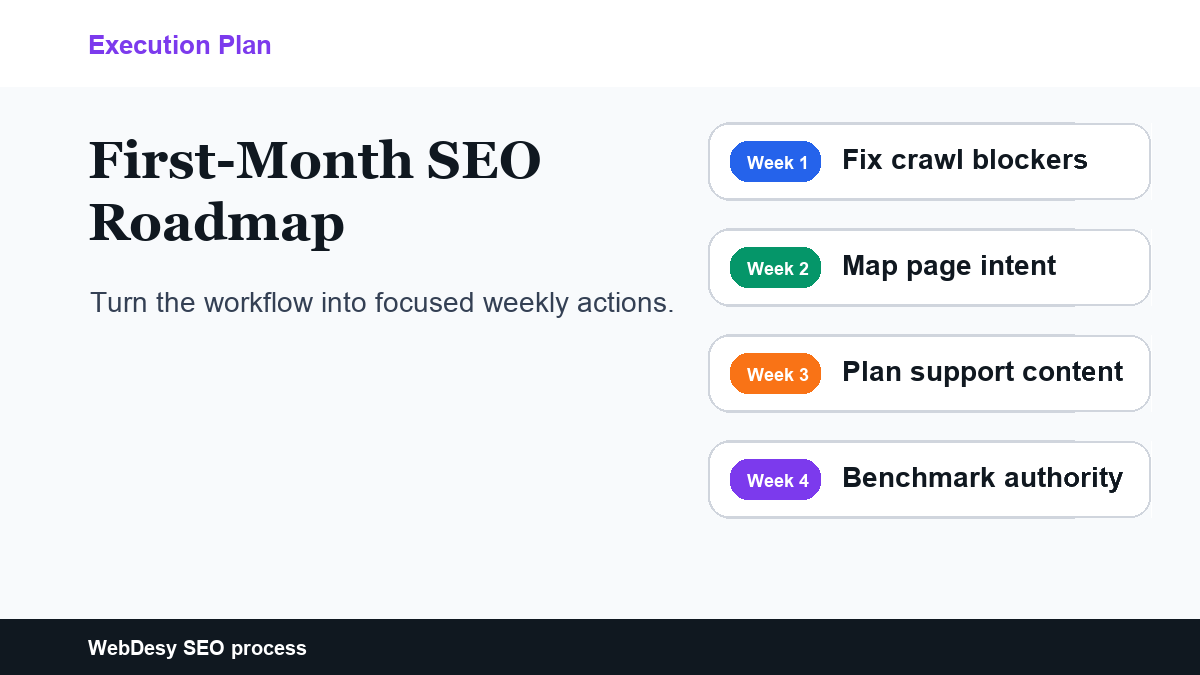
Here is how I would usually turn the three-step workflow into the first month of work:
- Week 1: Crawl the site, prioritize red-flag technical issues, fix broken internal links, review sitemap cleanliness, and identify important orphan pages.
- Week 2: Confirm the primary keyword direction for the homepage or landing page, rewrite the above-the-fold recommendations, and prepare title, description, headings, and image alt updates.
- Week 3: Build a short list of informational blog topics that support the main page and add internal-link recommendations.
- Week 4: Review competitors, map backlink opportunities, check schema/entity signals, and set up monthly reporting.
Download the checklist: Use the two-page worksheet to review your own technical issues, keyword direction, on-page signals, internal links, and competitor authority gaps.
The exact scope depends on the site size and the number of priority pages, but this order keeps the work from becoming scattered.
Common Mistakes This Workflow Avoids
- Buying links before fixing crawl problems. Authority helps more when the target pages are crawlable, indexable, and internally supported.
- Targeting a vague combined keyword. A page should usually have one main search intent, with supporting phrases layered underneath.
- Ignoring above-the-fold copy. If the keyword never appears in the visible page copy, the page may feel less relevant to both users and search engines.
- Publishing blog posts without a money-page path. Informational content should support a relevant landing page through internal links and clear next steps.
- Calling every tactic AI SEO. AI-search visibility still depends on clean technical foundations, clear entities, useful content, schema, and authority signals.
Need a Prioritized SEO Roadmap?
Need help choosing the right SEO priorities? Send me your homepage or top service page and 2-3 competitors, and I will turn them into a prioritized roadmap: technical fixes, keyword direction, on-page recommendations, internal-link ideas, backlink opportunities, and AI-search visibility checks. You can also see how I work on my SEO consulting page.
FAQ
What should I fix first when one page is not getting enough search visibility?
Start with the critical technical issues that block crawling, indexing, and clean internal navigation. Broken internal links, redirect chains, sitemap redirects, duplicate pages, and orphan pages usually deserve attention before backlinks or new content.
How many keywords should a single page target?
One primary search intent per page works best. Supporting phrases can appear naturally in subheadings and body copy, but the title, H1, and above-the-fold copy should commit to one clear direction so the page is easy to classify.
Are backlinks still useful if I also care about AI search visibility?
Yes. Backlinks still help search engines evaluate authority, but they should be paired with strong on-page clarity, entity signals, schema, helpful content, and competitor research.
Can this three-step plan be used for a homepage?
Yes. A homepage can use the same sequence: remove technical friction, clarify the primary keyword or service intent above the fold, improve metadata and internal links, then benchmark competitors to understand what authority signals the page needs.