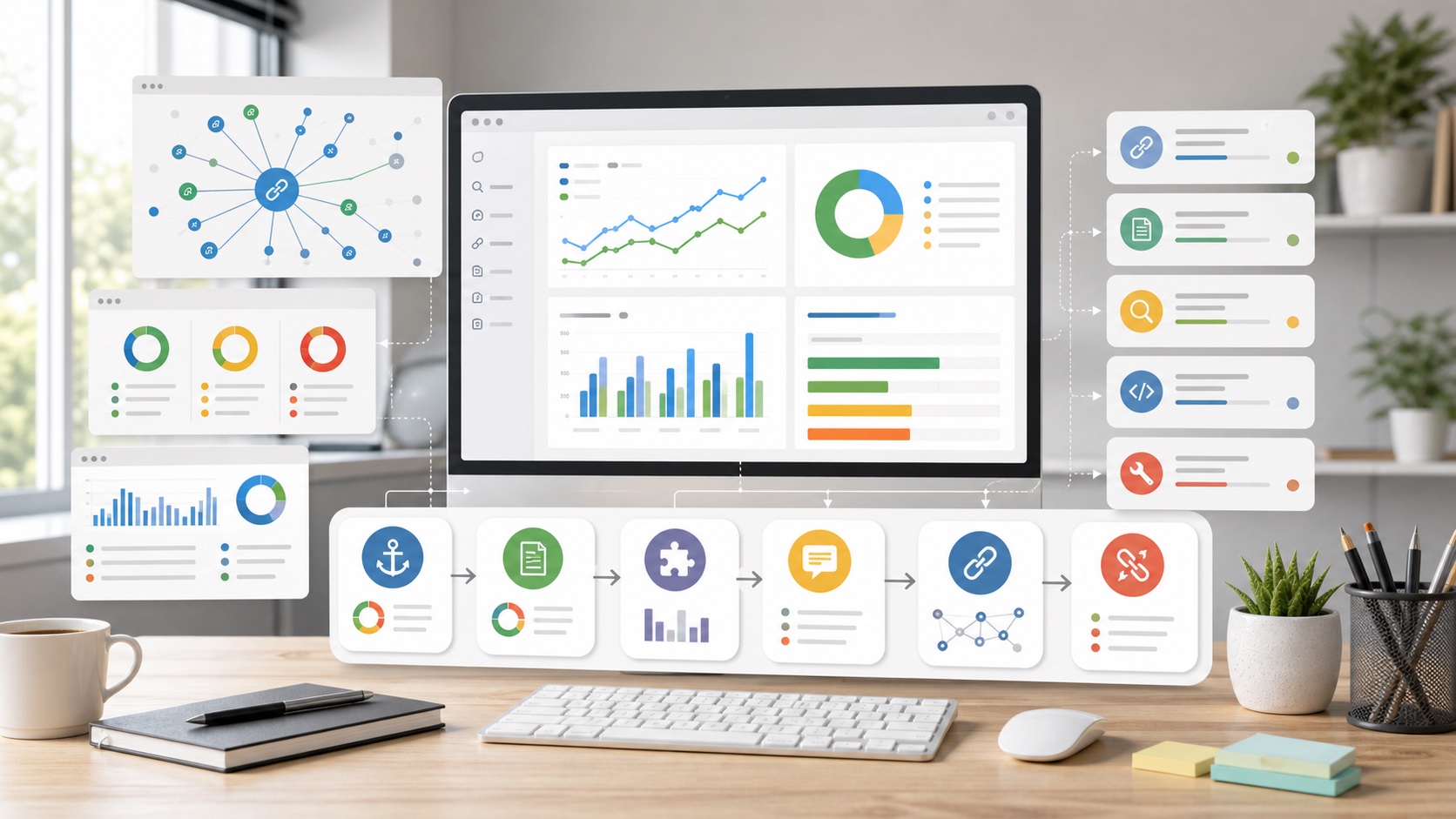
An SEO recovery plan works best when the research is translated into concrete next actions. In this workflow, I reviewed link profile signals, content opportunities, page overlap, SERP features, outreach gaps, and broken backlink targets. The goal was to turn a scattered set of audit findings into a clear plan for what to fix, create, strengthen, and monitor next. The process below shows how to move from raw SEO data to practical execution without letting the audit become another static spreadsheet.
If you want a shorter execution framework before building the full recovery roadmap, start with this three-step SEO plan for better search visibility.
For a compact walkthrough of the same priority stack, see this three-step SEO workflow for better rankings, which connects technical SEO, keyword selection, and backlink source research.

SEO Recovery Checklist
Before jumping into fixes, it helps to turn the audit into a simple action table. This makes it easier to separate urgent technical risks from longer-term content and authority work.
| Audit area | What to check | Useful output | Priority signal |
|---|---|---|---|
| Backlinks and anchor text | Spam patterns, overused anchors, weak domains, and links to broken URLs | Review list, redirect list, outreach list, or possible disavow candidates | High when risky links or valuable broken backlinks are found |
| Content gaps | Topics competitors cover that the site does not answer well yet | New page ideas, blog briefs, FAQ sections, or refresh tasks | High when the topic is relevant and commercially useful |
| Keyword cannibalization | Multiple URLs ranking for the same query or intent | Primary page decision, merge plan, or internal-link plan | High when competing pages split rankings for a core topic |
| SERP features | Featured snippets, People Also Ask boxes, video results, and ranking movement | Answer blocks, short videos, tables, and page refreshes | High when the page already ranks close to page one |
| Technical signals | Indexability, redirects, canonicals, internal links, and sitemap behavior | Fix list with owners and validation steps | High when Google cannot crawl, index, or consolidate signals correctly |
If the audit includes AI visibility or crawler-access checks, I use the AI Crawler & llms.txt Checker to quickly test robots.txt, llms.txt, llms-full.txt, and major AI crawler user agents before turning the finding into a fix.
Start With Anchor Text and Link Quality Signals
The first step is to review backlink anchor text for patterns that look unnatural, overused, or irrelevant. Suspicious anchors do not automatically mean a site needs a disavow file, but they are useful clues for finding domains that deserve a closer manual review.
When I run this kind of check, I separate obvious noise from links that may still have value. The goal is to build a review list, not to delete or disavow links blindly. A link from a weak, unrelated, or spam-looking domain should be assessed differently from a legitimate mention that happens to use imperfect anchor text.
This is also where the recovery plan starts to become concrete. Each suspicious domain can be marked as keep, review later, outreach, or possible disavow candidate. That gives the team a cleaner path forward than a generic “bad links” export.
Use Content Gaps as a Content Roadmap
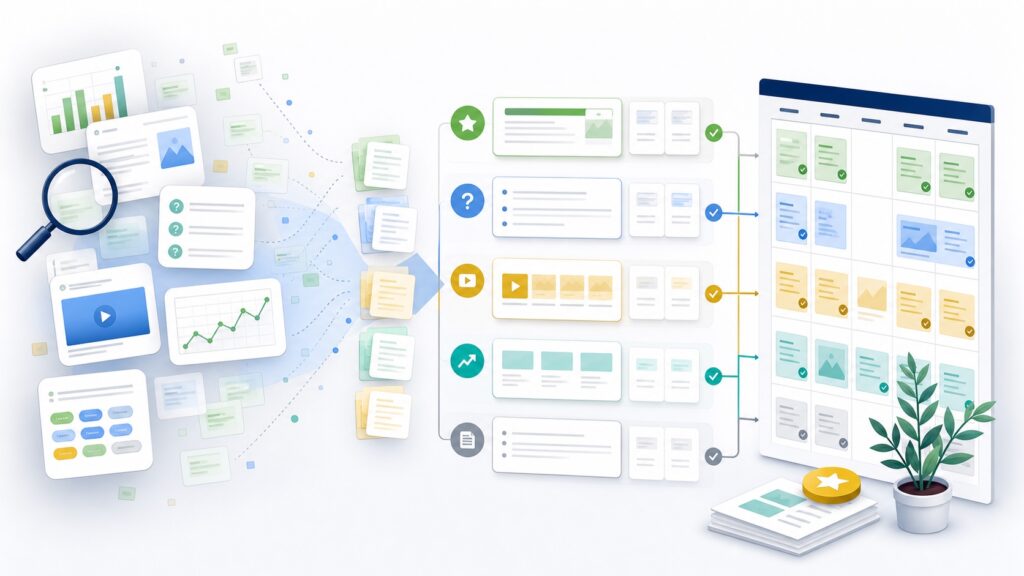
Content gap analysis shows where competitors cover useful topics that the audited site does not yet address. The most valuable opportunities are not always the highest-volume keywords. They are the topics that are relevant to the business, supported by search demand, and missing from the current site structure.
A strong content gap sheet should help copywriters and stakeholders decide what to create next. It should show why a topic matters, how closely it relates to the existing offer, and whether it deserves a blog post, guide, landing page, FAQ section, or update to an existing page.
This pairs well with a focused keyword research workflow. Instead of collecting keywords for their own sake, the audit should turn them into a realistic publishing and optimization plan.
Fix Keyword Cannibalization With Clear Page Priority
Keyword cannibalization happens when more than one page competes for the same query and search engines struggle to identify the primary result. It is not always a disaster, but it becomes a problem when several URLs dilute ranking signals for the same search intent.
The practical fix starts by choosing the main page for the keyword or topic. Secondary pages should either support that main page with contextual internal links, be merged if they overlap too heavily, or be repositioned around a different intent.
Internal linking is often the simplest first move. If a supporting article mentions the target topic, link from that article to the priority page with a natural anchor. That helps Google understand which page should lead for the term while still preserving useful supporting content.
Look for SERP Feature Opportunities
Featured snippets, People Also Ask boxes, and video carousels can reveal quick optimization opportunities. If a keyword already shows a SERP feature, the page can often be improved with a clearer answer block, better formatting, a short supporting video, or more direct coverage of the question.
This is especially useful when the site already ranks near page one. A page in striking distance may not need a full rewrite. It may need a better definition, a compact list, a table, a video embed, or a section that answers the query more directly.
Trending keyword checks are useful here too. When rankings improve or new keywords appear, treat them as early signals. Some will be noise, but others show where Google is already testing the site for new relevance. That is the moment to refresh the page before the opportunity fades.
Turn Linkable Topics Into Assets
Competitor backlink analysis can show which types of pages naturally attract links in a niche. If competitors earn links to calculators, statistics pages, ethics guides, templates, comparison resources, or glossary content, those patterns can guide the next linkable asset ideas.
The aim is not to copy competitor pages. The aim is to understand what publishers, forums, educators, journalists, and bloggers already reference. A page that solves a recurring problem or explains a complicated topic clearly is much easier to promote than a generic service page. That is also why backlinks should be treated as one part of the recovery plan, not the entire strategy; I covered that broader point in SEO in the Age of AI: Why Backlinks Aren’t Enough.
That is where content planning and link building start to overlap. The best assets are useful enough to rank, cite, share, and include in outreach without feeling forced.
Use Outreach Research to Move the Work Forward
Outreach campaigns often stall because contact research is incomplete. A recovery plan should make the next step obvious: which sites are worth contacting, which contacts are already available, which records need enrichment, and which prospects should be reached through social channels instead of email.
For campaigns involving communities, forums, and social platforms, the plan should also account for warm-up time. You usually cannot get results by dropping a link into a community cold. Accounts need to participate, answer questions, and build trust before any promotion makes sense.
This is also where campaign ownership matters. If one team member is blocked or moving slowly, the recovery plan should identify what can be reassigned so the campaign does not sit idle.
Recover Authority From Broken Backlinks
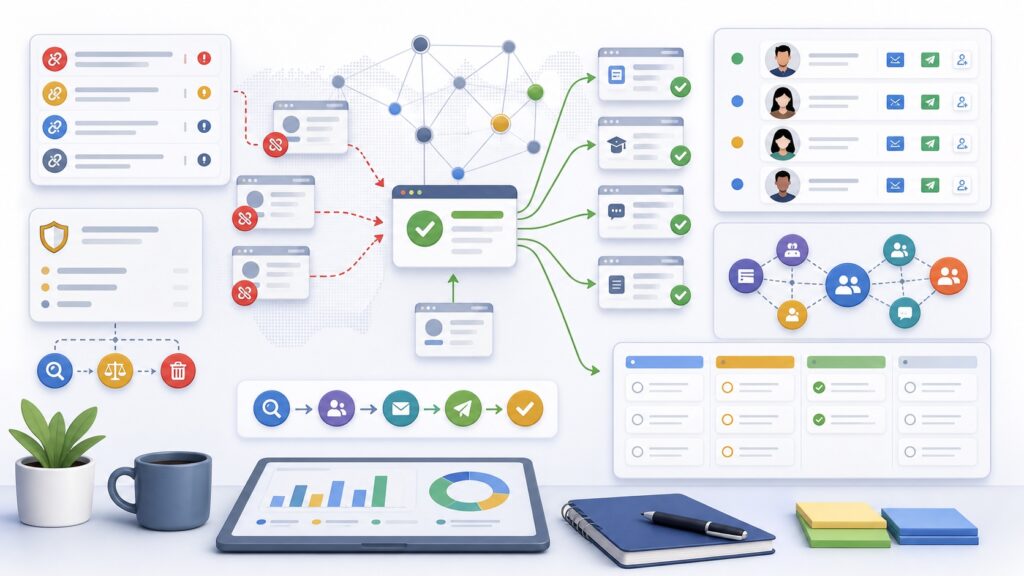
Broken backlinks are one of the easiest recovery opportunities to miss. If other websites link to URLs that now return 404 errors, the site may be wasting authority that could be recovered with a relevant redirect.
For example, an old guide URL may still have external links from forums, blogs, or resource pages even though the page no longer exists. In that case, the fix is not just to remove the 404 from a crawl report. The better move is to redirect the old URL to the closest live replacement, then verify that the redirect is one clean 301 hop and that the destination page is indexable.
The right redirect target matters. Do not send every broken URL to the homepage. Find the closest matching live page, then redirect the old URL there so users and search engines land somewhere useful.
A crawler such as Screaming Frog, combined with backlink data, can help validate the issue from both sides: which old URLs are broken, which external pages still link to them, and which live pages should become the destination.
Prioritize the Recovery Plan
Once the audit is complete, the next step is prioritization. I usually group items into four buckets: risk reduction, quick ranking wins, content expansion, and link authority recovery.
- Risk reduction: suspicious anchors, spammy domains, and technical problems that may hold the site back.
- Quick ranking wins: pages already close to better visibility, including SERP feature and trending keyword opportunities.
- Content expansion: content gaps, missing landing pages, and supporting articles that strengthen topical coverage.
- Authority recovery: broken backlinks, outreach prospects, linkable assets, and community participation.
This prevents the team from treating every issue as equally urgent. A high-intent topic, for example, deserves different handling from a low-priority informational idea. If you are building a content plan, start with pages that match business value as well as search demand; this is the same logic behind finding high-intent SEO keywords.
SEO Recovery Plan FAQ
What is an SEO recovery plan?
An SEO recovery plan is a prioritized set of actions designed to restore or improve organic visibility after rankings, traffic, indexation, or authority signals weaken. It usually combines technical fixes, content updates, internal linking, backlink recovery, and monitoring.
How do you prioritize SEO audit findings?
Start with issues that block crawling, indexing, ranking signal consolidation, or user access. Then prioritize fixes that affect high-value pages, pages with backlinks, pages close to ranking improvements, and topics with strong business relevance.
How do you fix keyword cannibalization?
Choose the primary page for the search intent, then support it with internal links from secondary pages. If two pages overlap too much, merge them or reposition one around a different intent so Google has a clearer page to rank.
How do you recover value from broken backlinks?
Find broken URLs that still have external links, map each one to the closest relevant live page, implement a clean 301 redirect, and verify that the final destination returns 200, is indexable, and has a self-referencing canonical.
Final Takeaway
An SEO audit is only valuable if it turns into action. Anchor text review, content gaps, cannibalization checks, SERP feature analysis, outreach research, and broken backlink recovery all become more useful when they are connected to specific tasks.
The best recovery plan is not the longest one. It is the one that tells the team what to do next, why it matters, who should own it, and how it supports rankings, visibility, and conversions over time.
Need help turning an SEO audit into a prioritized recovery plan? Contact WebDesy and I can help you turn the findings into a practical action plan.
Related reading: How to avoid new technical SEO issues after a site audit cleanup.