
Search traffic is changing fast. For years, the standard SEO playbook was fairly predictable: improve technical health, publish useful content, earn quality backlinks, and track rankings. Those fundamentals still matter, but they are no longer enough on their own.
If you want the practical version of that sequence, I published a three-step SEO workflow for better rankings that puts technical cleanup, keyword targeting, and backlink research into one repeatable process.
For the practical workflow behind that idea, use this three-step SEO plan for better search visibility to connect technical cleanup, on-page clarity, authority building, and AI-search readiness.
The rise of AI Overviews, ChatGPT, Perplexity, Gemini, and other answer engines has changed how users discover information. A site can still rank well and still lose clicks, because the answer may now appear directly inside the search result or AI interface.
That means SEO strategy needs to evolve. The goal is no longer just to rank. The goal is to become visible, cited, and trusted across both search engines and AI tools.
For the technical side of AI visibility, you can also run the AI Crawler & llms.txt Checker to see whether major AI crawlers can reach your site and whether robots.txt, llms.txt, and llms-full.txt are discoverable.
Backlinks Still Matter, But They Are Not the Whole Problem
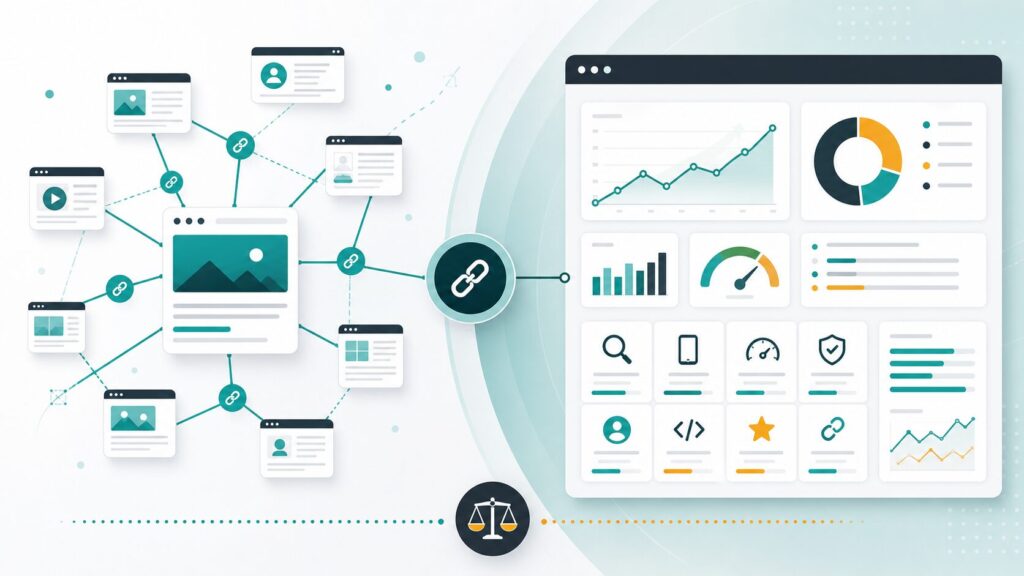
Backlinks remain important, especially when they come from relevant sites where the target audience already spends time. But when a site loses traffic after AI-driven search changes, backlinks are not always the root cause.
In many cases, competitors may have fewer or weaker links and still perform better because they offer content that is harder for AI tools to replace. If a page only repeats common information, an AI system can summarize that information directly. The user may get what they need without clicking.
So while relevant backlink building should continue, it should not be treated as the main fix for AI-driven traffic decline. The stronger priority is building content and assets that AI cannot easily flatten into a generic answer.
The New Priority: AI-Resilient Content

AI-resilient content is content that gives users a reason to click, interact, compare, calculate, or evaluate something directly on the website.
Strong examples include original research, proprietary data, student or customer case studies, testimonials, interactive tools, calculators, comparison pages, intent-rich landing pages, and product or service pages with unique decision-making value.
This type of content is harder for AI to fully reproduce. A chatbot can summarize general advice, but it cannot easily replace a real student story, a dynamic comparison tool, or a calculator that gives a personalized result.
Tools and Calculators Should Become Core SEO Assets

One of the clearest opportunities is building tools that help users make decisions or take action.
For education and admissions brands, this could include a university comparison tool, a preparation planner, a score calculator, a course recommendation tool, a personalized study schedule generator, an eligibility checker, or a question drill tool.
These assets are valuable because they create interaction. The user is not just reading information; they are doing something with it. That makes the page more useful, more linkable, and more likely to be cited by AI tools when users ask for practical resources.
Case Studies and Testimonials Are More Important Than Ever

Another strong format is experience-led content. AI can explain what a process is, but it cannot authentically describe what it felt like for a specific person to prepare, struggle, improve, and succeed.
That is where case studies and testimonials become powerful. A strong case study can cover the person’s starting point, what they struggled with, which resources or services they used, how their preparation changed, what result they achieved, and what advice they would give to others.
This kind of content builds trust with users and gives search engines and AI tools a clearer reason to reference the brand.
YouTube, Podcasts, and Brand Mentions Feed AI Visibility

AI visibility is not only influenced by traditional web pages. Brand mentions across YouTube, podcasts, Reddit, and relevant communities can also matter.
If a brand is mentioned in relevant YouTube videos or podcasts, it increases the chances that AI tools understand the brand as part of the topic landscape. The goal is not just more mentions. The goal is more relevant mentions in the places where the audience is already paying attention.
Good targets include niche YouTube channels, expert podcasts, student advice channels, parent-focused education resources, and relevant communities where users ask real decision-making questions.
Outreach Should Be Relevant, Not Just Scalable

Outreach still has a role, but the quality of outreach matters. A broad template may be efficient, but high-value opportunities often require a more bespoke approach.
For stronger outreach, the message should clearly show that the sender understands the site, the page being referenced, and the value of the resource being offered. A hybrid workflow can still work: use outreach software for tracking and follow-ups, but personalize the key details so the message feels genuinely relevant.
The same principle applies to backlink building more broadly. The priority should be links from sites, creators, and communities that overlap with the actual audience.
The Right KPIs Need to Change Too

Traditional rankings and traffic still matter, but they do not tell the full story anymore.
SEO teams should also track visibility in AI tools, brand mentions across relevant platforms, citations in AI-generated answers, engagement with tools and calculators, conversions from intent-rich pages, growth in relevant referral traffic, and rankings for pages that actually match the right intent.
The question is not only “Are we ranking?” It is also “Are we being selected, cited, and trusted where users now make decisions?”
The Practical Strategy

For teams with limited resources, the priority should be clear: build AI-resilient assets first, continue relevant backlink outreach, increase brand visibility on high-affinity platforms, improve thin content where it matters, and align SEO, PPC, and content strategy around the assets most likely to drive revenue.
The future of SEO is not just about publishing more content. It is about creating assets that are useful enough, unique enough, and interactive enough that users still need to visit the website.
For more practical SEO strategy, read WebDesy’s guides to high-intent SEO keywords, better website photography for SEO, and validating a product idea.
Bottom line: brands that want to stay visible need assets that are useful enough, unique enough, and interactive enough that users still need to visit the website.
Related: If you use Cloudflare, my Cloudflare SEO guide explains how to review caching, crawler access, AI crawler controls, and edge rules together.